Top 10 Reasons Why Prefilled Syringes Are Becoming Popular

Time:2026-11-05 Author:Aria
0%

Prefilled syringes are moving from specialist use into more routine care. Their appeal is visible in practical details: a labeled, ready-to-use device can reduce preparation steps, simplify dose handling, and support administration outside a clinic when appropriate. The trend also reflects wider changes in drug delivery, including biologic medicines and care models that place more responsibility on patients. Still, convenience alone does not make a device suitable for every medicine or setting.

Why are prefilled syringes becoming popular? The answer involves several connected factors: potential workflow efficiencies, consistent dosing, reduced preparation, easier storage and transport, and growing demand for self-administration. Safety features and clear labeling may also help, though performance depends on device design, training, and the specific product. Small details matter. A readable scale. A secure cap. A plunger that moves smoothly. Yet no device removes the need for careful handling.

Peter Soelkner, a pharmaceutical manufacturing executive at Vetter, offers a useful industry perspective. In paraphrase, his perspective is that reliable drug delivery depends on coordinating the medicine, the container, and the manufacturing process—not treating the syringe as an afterthought. That distinction matters. A prefilled format can bring benefits, but it also introduces design, filling, inspection, and usability challenges. The following ten reasons examine both sides, from convenience and dose accuracy to patient experience and production demands. The case is compelling, but not automatic. Each application needs evidence, and some trade-offs deserve closer scrutiny.
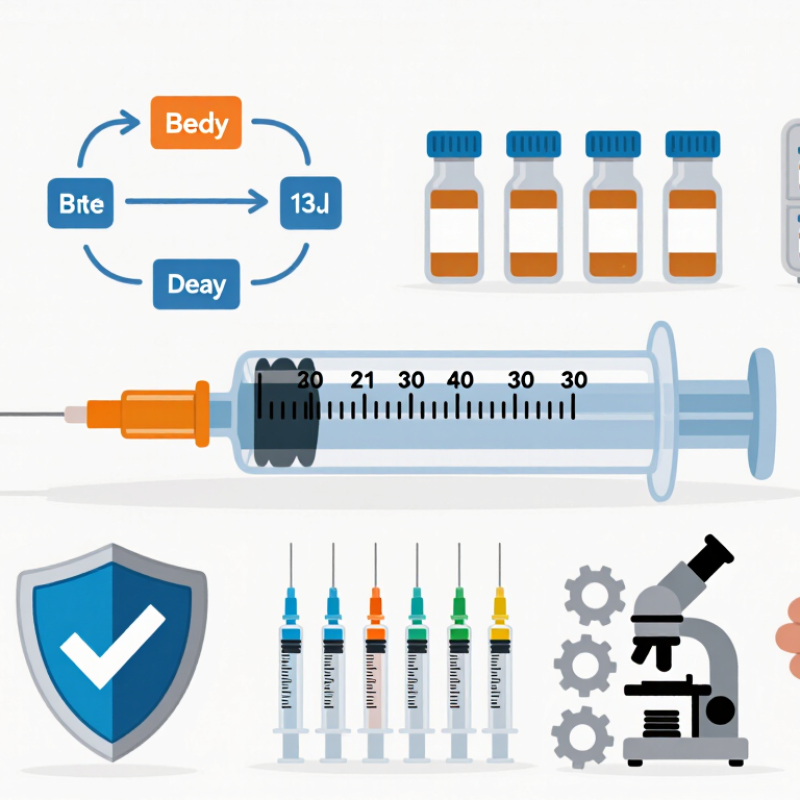
Top 10 Reasons Why Prefilled Syringes Are Becoming Popular

What Prefilled Syringes Are and How They Work

A prefilled syringe is a sterile, single-dose device containing medicine before it reaches the user. It usually has a glass or polymer barrel, a stopper, and a plunger. Depending on its design, it may include a needle or accept one separately. The measured dose is sealed inside the barrel. Small, but carefully engineered.

Before use, check the label, expiry date, medicine appearance, and package integrity. Follow the specific instructions: some designs require a needle attachment, while others do not. Pressing the plunger moves medicine through the needle and into the intended tissue. They are not all interchangeable. ISO 11040, a standards series for prefilled syringes, addresses requirements such as design and testing. Grand View Research estimated the global market at USD 7.6 billion in 2023 and projected 10.3% annual growth from 2024 to 2030. That forecast describes market growth, not proof that every device suits every medicine. Compatibility, dose, storage, and user technique still matter. Convenience helps, but it does not remove the need for careful handling.

How Prefilled Syringes Are Designed, Filled, and Stored

A prefilled syringe begins with a container chosen for the medicine, not just convenience. Glass barrels offer visibility and established compatibility, while polymer options can reduce breakage risk. Designers assess drug contact materials, stopper fit, needle protection, and dose accuracy. ISO 11040-4 provides specifications for glass barrels used in prefilled syringes. Tiny details matter: a poor seal can compromise sterility.

Filling takes place in controlled environments. Equipment meters each dose, then operators inspect syringes for particles, cracks, and closure defects. FDA guidance on container-closure systems emphasizes that packaging must protect a drug’s identity, strength, quality, and purity. Storage conditions depend on product-specific stability data; some medicines need refrigeration, while others require protection from light. The Grand View Research report on the prefilled syringes market estimated its value at US$7.9 billion in 2023, reflecting the sector’s growing scale. Bigger production does not automatically mean better quality.

Tips: Check the product label for storage instructions. Keep syringes in their original packaging until use, and never assume all formulations tolerate freezing. Small deviations matter. A design can look flawless and still deserve rechecking, especially when materials, fill lines, or storage conditions change.

Top 10 Reasons Why Prefilled Syringes Are Becoming Popular

How Prefilled Syringes Are Designed, Filled, and Stored

Representative nominal capacities, not market-share data. Prefilled syringes are designed around a specific medicine and dose; common formats include 0.5 mL, 1 mL, 2.25 mL, 3 mL, and 5 mL. They are filled and sealed using validated manufacturing processes, then stored according to the medicine’s labeling. Supplying a measured dose ready for administration can reduce preparation steps and support convenient, consistent dosing.

How They Support Accurate Dosing and Reduce Medication Errors

Top 10 Reasons Why Prefilled Syringes Are Becoming Popular: Accurate Dosing, Fewer Medication Errors

A prefilled syringe contains a measured dose, reducing bedside preparation steps. Staff do not need to draw medicine from a vial or calculate a volume at the point of care. Fewer steps can mean fewer opportunities for calculation or transfer errors. The dose still needs checking. Clinicians must verify the patient, medicine, route, and timing.

The World Health Organization’s 2017 Medication Without Harm report estimates medication errors cost about US$42 billion globally each year. Its 2024 Global Patient Safety Report estimates that roughly one in ten patients experiences harm in healthcare. These figures describe broad safety challenges, not the proven impact of prefilled syringes. Prefilled formats can support consistency, but incorrect selection, labeling, or administration can still cause harm. A prepared dose is not an error-proof dose.

Tips: Check the label against the order before use. Keep the syringe’s packaging intact until needed, and confirm the dose and expiry date. Small checks matter. In busy settings, interruptions can still break a careful routine, so teams should review their actual workflow rather than assume preparation has become risk-free.

How Convenience and Efficiency Benefit Patients and Healthcare Providers

Top 10 Reasons Why Prefilled Syringes Are Becoming Popular

Prefilled syringes make routine medication administration simpler for patients and care teams. The dose is prepared in advance, so staff may spend less time drawing medicine from a vial, measuring it, and labeling a separate syringe. At a busy clinic, that can mean fewer preparation steps between a prescription and an injection. For patients who self-administer prescribed medicines, clear instructions and a ready-to-use device can also make treatment feel more manageable.

Efficiency matters, but it must not be confused with guaranteed safety. The World Health Organization’s 2017 Medication Without Harm report estimates that medication errors cost US$42 billion worldwide each year. Prefilled, clearly labeled doses may help avoid some preparation-related risks, yet correct storage, patient checks, and training remain essential. Needs vary by drug and setting. Convenience alone is not enough.

Tips: Check the label, expiration date, and storage instructions before use. Healthcare providers should follow local procedures and teach patients how to handle and dispose of syringes safely. A small pause can prevent a rushed mistake.

What Safety, Cost, and Manufacturing Factors Influence Their Adoption

Prefilled syringes can remove several preparation steps: drawing medicine from a vial, selecting a needle, and checking the dose. Fewer steps may reduce opportunities for contamination or dosing mistakes, especially in busy clinics. The World Health Organization’s 2017 report estimated medication errors cost US$42 billion worldwide each year. That figure covers all medication errors, not prefilled syringes specifically. The distinction matters. A ready-to-use device can help, but it cannot replace staff training or careful checks.

Cost savings are less certain. Prefilled formats may reduce preparation time and leftover medicine, yet their purchase price, packaging, and specialized filling lines can be higher. Grand View Research estimated the global prefilled-syringe market at US$7.55 billion in 2023 and projected 10.4% annual growth from 2024 to 2030. That signals expanding investment, not proof of lower costs for every facility. Manufacturing also demands close control of sterility, material compatibility, and visual inspection. Small details count. A syringe that performs well on the production line may still be awkward to handle with gloves or under pressure. That trade-off deserves scrutiny. Adoption works best when safety testing, workflow trials, and total-cost comparisons happen together.

Top 10 Reasons Why Prefilled Syringes Are Becoming Popular — What Safety, Cost, and Manufacturing Factors Influence Their Adoption

Rank Adoption factor Why it matters Safety, cost, or manufacturing impact Important consideration Reference basis
1 Fewer preparation steps A ready-to-administer presentation can avoid steps such as drawing medicine from a vial immediately before use. May simplify workflow and reduce opportunities for preparation-related mistakes; the effect depends on the product and care setting. The syringe still requires correct product selection, dose verification, and administration technique. FDA, Applying Human Factors and Usability Engineering to Medical Devices; ISMP, Guidelines for Safe Preparation of Compounded Sterile Preparations.
2 Potential for more consistent dosing A manufacturer-filled, labeled syringe can reduce the need for users to measure a dose from a larger-volume container. Can support dose accuracy when the prescribed dose matches the syringe presentation and the product is used as directed. Incorrect selection, incomplete delivery, or use of an unsuitable syringe size can still result in dosing errors. FDA, Design Considerations for Devices Intended for Home Use; FDA, Applying Human Factors and Usability Engineering to Medical Devices.
3 Reduced handling before administration A prefilled format can reduce transfers and other manipulation steps compared with drawing a dose from a vial. Fewer handling steps may reduce some opportunities for contamination, but do not eliminate infection risk or replace aseptic practice. Use only when the product, route, and handling instructions are appropriate; never assume a single-use device can be reused safely. CDC, Injection Safety; WHO, Best Practices for Injections and Related Procedures Toolkit.
4 Convenience in clinical and home settings A compact, ready-to-use presentation can be practical where preparation resources or time are limited. May streamline administration and support self-administration for products specifically approved and designed for that use. Home use requires clear instructions, appropriate user training, and packaging that supports safe handling and disposal. FDA, Design Considerations for Devices Intended for Home Use; FDA, Applying Human Factors and Usability Engineering to Medical Devices.
5 Clearer product and dose identification A labeled, single-dose presentation can make the intended product and contents easier to identify at the point of use. May help reduce selection or labeling errors when labeling is legible and the syringe remains in its original packaging until use. Labels must remain readable and distinguishable; users must check the drug, strength, expiration date, and patient-specific dose. FDA, Safety Considerations for Container Labels and Carton Labeling Design to Minimize Medication Errors.
6 Potential reduction in leftover medicine A unit-dose presentation may contain the quantity intended for one administration, rather than requiring withdrawal from a larger container. Can reduce unused residual drug in some situations, which may offset part of the higher packaging cost. Actual savings depend on dose fit, discard rules, product stability, and how often doses are wasted in the alternative format. USP General Chapter <797>, Pharmaceutical Compounding—Sterile Preparations; WHO, Best Practices for Injections and Related Procedures Toolkit.
7 More standardized workflows Consistent presentations can make routine storage, selection, and administration processes easier to standardize. May support training and workflow consistency, particularly where the same presentation is used repeatedly. Standardization does not replace local protocols, staff competency, or checks for patient-specific dosing requirements. FDA, Applying Human Factors and Usability Engineering to Medical Devices; ISMP medication-safety guidance.
8 Possible labor and workflow savings Less bedside or clinic-side preparation may save staff time in settings where doses would otherwise need to be drawn up. Potential operational savings should be assessed alongside acquisition price, storage, disposal, and inventory costs. There is no universal cost advantage; the result varies by medicine, dose, volume, workflow, and procurement terms. FDA and USP guidance on drug packaging and sterile product handling; cost impact requires local economic analysis.
9 Compatibility with advanced therapies Some medicines benefit from a delivery format that is designed around a specific dose, route, or administration device. A purpose-designed presentation can support product usability, but requires demonstrated compatibility between the drug and all syringe-contact materials. Formulation stability, container-closure integrity, extractables and leachables, and dose delivery must be evaluated for the specific product. FDA, Container Closure Systems for Packaging Human Drugs and Biologics; USP General Chapter <1663>.
10 Improving fill-finish and device capabilities Advances in sterile filling, inspection, and syringe components can make more products suitable for this format. Can expand manufacturing options, but requires validated processes, specialized equipment, quality controls, and reliable component supply. High equipment and validation requirements, production yield, sterility assurance, and supply-chain resilience can influence feasibility and cost. FDA, Sterile Drug Products Produced by Aseptic Processing—Current Good Manufacturing Practice; FDA, Container Closure Systems for Packaging Human Drugs and Biologics.

Note: These are general adoption factors, not guarantees of improved outcomes or lower costs. Benefits and risks depend on the specific medicine, syringe design, user, and setting.

FAQS

What is a prefilled syringe?

It is a sterile, single-dose device with medicine sealed inside. Its barrel may be glass or polymer.

What parts might a prefilled syringe have?

Most have a barrel, stopper, and plunger. Some include a needle; others need one attached separately.

How does it deliver a dose?

Pressing the plunger moves medicine through the needle into the intended tissue. Follow the device’s specific instructions.

Can a prefilled syringe reduce dosing mistakes?

A measured dose can remove steps like drawing medicine from a vial. It still needs careful checking.

What should I check before use?

Compare the label with the instructions. Check the expiry date, medicine’s appearance, and package condition. Small checks matter.

Does a ready-to-use syringe guarantee safety?

No. The wrong selection, storage, or technique can still cause harm. Convenience is not a guarantee.

Why can these syringes help busy care teams?

They may reduce measuring, drawing, and labeling steps. A pause to verify the patient and dose still matters.

Are all prefilled syringes interchangeable?

No. Compatibility, dose, storage, and handling depend on the medicine and device. The differences can be easy to overlook.

Conclusion

Prefilled syringes are ready-to-use devices that contain a measured dose of medication in a sealed syringe. Their design brings together the syringe, needle or needle connection, and drug container in a format intended to support convenient handling. They are carefully designed, filled under controlled manufacturing conditions, and stored according to the medication’s requirements to help preserve quality and reliability.

So, why are prefilled syringes becoming popular? A premeasured dose can help reduce preparation steps and the chance of dosing or handling errors, while making administration more straightforward for patients and healthcare providers. In busy care settings, they may save time and simplify inventory and workflow; for patients, they can offer greater ease when a prescribed treatment is suitable for self-administration. Adoption also depends on factors such as product safety, packaging, storage needs, manufacturing capacity, and overall cost. These considerations help explain why prefilled syringes are increasingly used where their practical benefits fit the medication and care requirements.

Aria

Aria

Aria is a dedicated marketing professional with a deep passion for innovative strategies and a keen understanding of our company's product offerings. With a wealth of experience in the industry, Aria excels at crafting engaging content that highlights the unique features and benefits of our......