Choosing between these syringe designs begins with a practical question: what is the difference between luer lock and luer slip syringes?
A luer lock syringe uses a threaded collar. The needle or connector twists into place. This creates a more secure connection during injections, transfers, and procedures involving movement or pressure. A luer slip syringe relies on friction. Its tip pushes directly into the matching hub. It can be faster to assemble, especially when speed matters and the connection remains stable.
Small details can change the decision. Wet gloves may reduce grip. Thick solutions may increase handling force. A loose connection can cause leakage, while excessive force can damage compatible components. Syringe volume, connector compatibility, dead space, and the intended clinical task also deserve attention.
Safety researcher Dr. James Reason wrote, “We cannot change the human condition, but we can change the conditions under which humans work.” This principle is useful here. Selecting the correct connector can reduce preventable handling errors, but it cannot replace training, inspection, or manufacturer instructions.
The choice is not always obvious.
This guide examines ten meaningful differences between luer lock and luer slip syringes. It considers security, speed, leakage risk, usability, compatibility, cost, and common clinical applications. Some comparisons depend on the syringe brand and connector design. That limitation matters. A simple rule may fail in a real procedure.
Expect practical examples, not marketing claims. A syringe beside a tray, a twisting collar, or a slippery hub can reveal differences that specifications alone may hide.
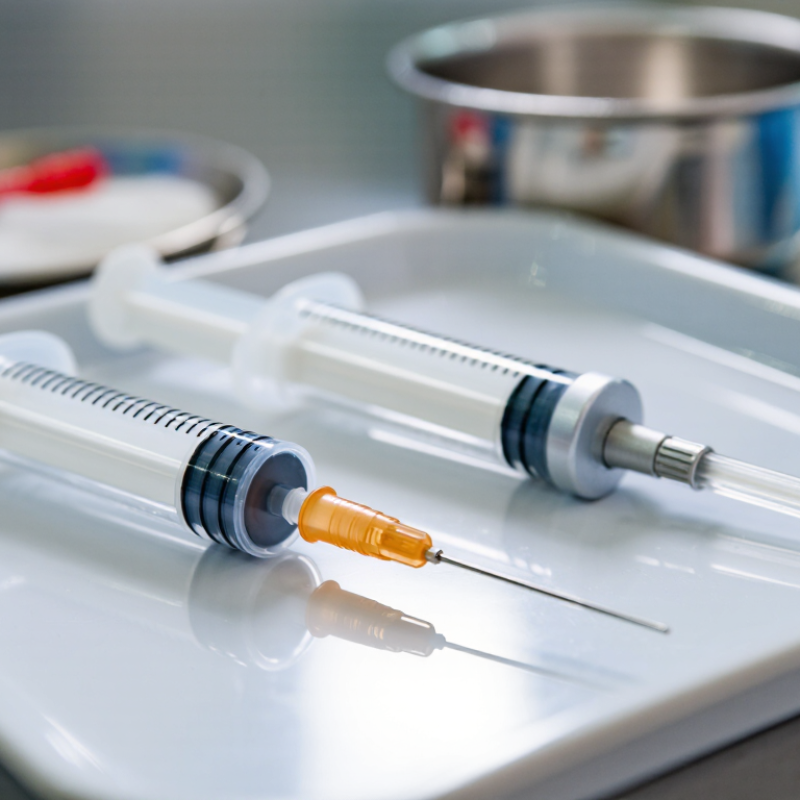
Luer Lock and Luer Slip syringes share a standard tapered connection, but their tip designs differ. A Luer Lock syringe has threaded grooves around the tip. The needle or extension twists into place and stays secured during use. A Luer Slip syringe has a smooth, tapered tip. The compatible needle presses directly onto this cone through friction.
This design difference affects handling, connection security, and workflow. Luer Lock models suit procedures involving movement, pressure, or repeated repositioning. Their threaded connection can reduce accidental separation when fitted correctly. Luer Slip models allow faster attachment and removal. They may be practical when speed matters and the syringe remains steady. However, connection strength depends on proper seating, clean surfaces, and suitable components. It is easy to assume one type fits every task. That assumption needs review. Compatibility should always follow the device instructions and clinical procedure.
Tips: Check the tip before use. Look for cracks, moisture, or visible contamination. For a Luer Lock connection, twist gently until secure; excessive force can damage the threads. For a Luer Slip connection, push the needle straight onto the cone without rocking it. Never force mismatched parts. If the fit feels loose, stop and replace the component. A brief inspection can prevent leakage, disconnection, and inaccurate delivery.
| No. | Comparison Dimension | Luer Lock Syringe | Luer Slip Syringe | Practical Consideration |
|---|---|---|---|---|
| 1 | Basic connection design | The syringe tip has a tapered luer cone plus external screw threads. The compatible device is secured by twisting it into the threaded collar. | The syringe tip has a tapered luer cone designed to accept a compatible device by pushing it onto the tip. | The key difference is the mechanical attachment method: threaded engagement versus friction-fit engagement. |
| 2 | Attachment method | The user pushes the connector onto the tip and rotates it to engage the threads and secure the connection. | The user presses the compatible needle or connector firmly onto the tapered tip. Rotation is generally not required for attachment. | Both designs depend on correct assembly and compatible luer dimensions. |
| 3 | Resistance to accidental disconnection | The threaded collar provides additional mechanical retention and generally reduces the risk of the attached device being pulled off. | The connection relies mainly on friction and a properly seated taper, so it may be more vulnerable to pulling, vibration, or incomplete attachment. | A locking connection is often preferred when movement or handling could place stress on the connection. |
| 4 | Connection security during pressure | The threaded connection can offer improved retention during applications involving moderate pressure, provided that the components are compatible and correctly tightened. | The friction-fit connection can be suitable for routine low-pressure use, but its security depends more heavily on the fit and insertion depth. | Neither design should be used beyond the pressure limits specified for the syringe and connected device. |
| 5 | Needle or device compatibility | Requires a needle or connector with a matching luer-lock interface, including compatible threads and taper dimensions. | Requires a compatible luer-slip device that fits securely over the tapered syringe tip. | Luer lock and luer slip components are not automatically interchangeable; the interface must be checked before use. |
| 6 | Ease and speed of assembly | Assembly usually takes an additional twisting step to engage the threads and tighten the connection. | Assembly is typically quick because the device is attached by pressing it onto the tapered tip. | Luer slip may be convenient for fast, uncomplicated procedures, while luer lock prioritizes retention. |
| 7 | Removal process | The attached component is normally removed by twisting it counterclockwise to disengage the threads. | The attached component is removed by pulling it away from the tapered tip, using appropriate technique. | Removal should be performed carefully to avoid spills, splashes, contamination, or accidental contact with sharp devices. |
| 8 | Leak and air-entry control | A correctly fitted and tightened connection can help maintain a stable seal between the mating components. | A correctly seated taper can also form a seal, but incomplete seating or an unsuitable connector may increase the chance of leakage or air entry. | A secure seal depends on connector condition, compatibility, correct assembly, and the intended application. |
| 9 | Typical use considerations | Often selected when the connected needle or device must remain firmly attached during handling, transfer, aspiration, or injection. | Often selected for straightforward applications where rapid attachment and removal are useful and additional threaded retention is not required. | The appropriate choice depends on the procedure, required connection security, equipment compatibility, and applicable instructions. |
| 10 | Main design trade-off | Provides added connection retention but may require more assembly time and a compatible threaded accessory. | Provides a simple, quick connection but generally offers less mechanical retention than a threaded connection. | Choose the interface based on the balance between speed, connection security, compatibility, and the requirements of the intended use. |
Luer Lock syringes use threaded connections. Luer Slip syringes rely on friction. The attachment method changes handling and security.
A Luer Lock connection usually resists twisting and accidental separation better. It suits procedures involving pressure, movement, or longer handling.
It can suit quick, low-pressure fluid transfer. Assembly is faster. Still, the needle must fit firmly.
No. Compatibility must be confirmed first. Some hubs support both systems, but assumptions can cause preventable errors.
A Luer Lock design may reduce leakage from poor seating. It is not automatically safer. The seal still needs inspection.
Check the tip, needle hub, seal, package, expiration date, and needle condition. Replace damaged or loose components immediately.
No. Syringe size, plunger control, graduations, and dead space all matter. Bigger is not always better.
Dead space can trap fluid near the connection. This may affect delivery accuracy. The smallest dead space is not always ideal.
Check the connection under controlled conditions. Look for movement or leakage. Do not force an uncertain fit.
Choosing only for convenience can be misleading. Procedure pressure, movement, speed, and handling habits may change the better option. Recheck when conditions change.
Luer lock and luer slip syringes are two common syringe designs that differ mainly in how the needle or connector attaches to the syringe tip. A luer lock uses a threaded connection that twists into place, creating a more secure attachment with improved resistance to accidental separation and leakage. A luer slip relies on a smooth, tapered tip, allowing the needle or connector to be pressed on and removed quickly. This makes it convenient for routine procedures where speed and simplicity are important.
When considering what is the difference between luer lock and luer slip syringes, users should compare stability, ease of use, needle compatibility, and intended application. Luer lock models are generally preferred when a firm connection is necessary, while luer slip models can be suitable for straightforward, low-pressure tasks. The best choice depends on the procedure, required connection security, handling preferences, and the compatibility of the syringe with the selected needle or accessory.

 JZCare Syringe