How do safety syringes prevent needle injuries? The answer begins with controlled design, not luck. These devices combine a needle, syringe, and protective mechanism that reduces contact with the sharp point. Some models use a sliding shield. Others retract the needle into the barrel after injection. Certain systems activate automatically, while others require the healthcare worker to press a button.
The movement is simple. The risk reduction is practical. After an injection, the needle may disappear behind a firm plastic shield before disposal. In another design, a hinged cover clicks over the needle and locks in place. These visible actions help protect nurses, doctors, laboratory workers, and waste handlers from accidental punctures. Dr. Michael Bell, a respected CDC infection-prevention expert, has warned, “No single intervention is going to prevent every infection.” That caution applies here. Safety syringes reduce exposure opportunities, but they do not replace training, careful disposal, or appropriate protective equipment.
A complete explanation must also acknowledge real-world limits. A device can be used incorrectly. A safety feature may not activate fully. Some workers may rush during emergencies or choose an unsuitable model. Small details matter, including grip, activation force, visibility, and compatibility with medication containers. Hands should remain behind the needle whenever possible. Used syringes must enter an approved sharps container immediately.
The technology is strong, but not perfect. Its value depends on thoughtful selection and consistent practice. This article will examine the mechanisms, clinical benefits, user challenges, and purchasing considerations behind safer syringe design.
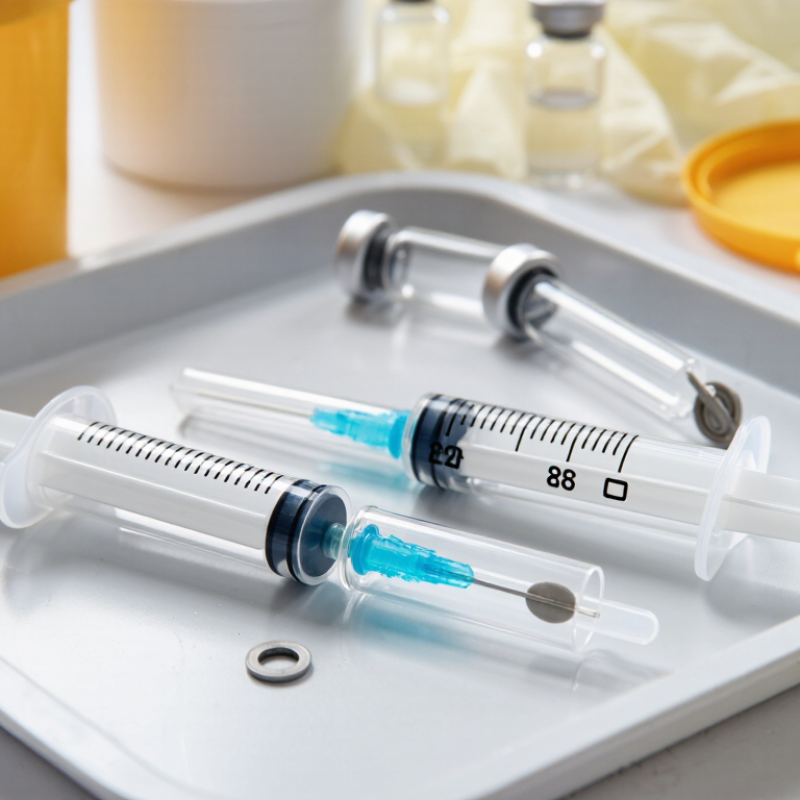
Safety syringes are medical devices designed to reduce accidental needle injuries during injections, blood collection, and disposal. They were developed because ordinary needles can remain exposed after use, creating risks for nurses, doctors, laboratory staff, and waste workers.
According to the CDC and NIOSH, healthcare workers in the United States have historically experienced an estimated 600,000 to 800,000 needlestick injuries each year. The figure is an estimate, not a perfect count. Underreporting remains a serious concern.
These syringes use built-in safety features, such as sliding shields, hinged covers, or retractable needles. The mechanism activates after injection or immediately before withdrawal. It then helps cover or remove the sharp point. This design reduces reliance on hurried hand movements, especially in crowded treatment rooms or during emergencies.
A World Health Organization report estimated that occupational sharps exposures could contribute annually to 16,000 hepatitis C infections, 66,000 hepatitis B infections, and 1,000 HIV infections among healthcare workers worldwide. These older global estimates still show why engineering controls matter.
They do not replace training, safe disposal containers, or careful procedures. In practice, a device can fail when staff use the wrong activation method, skip training, or force a damaged mechanism. That uncomfortable detail deserves attention. Safety depends on both product design and human behavior.
How Do Safety Syringes Activate Their Protective Mechanisms?
Safety syringes activate protection through a shield, sliding sleeve, hinged cap, or retractable needle. Some systems engage automatically when the needle leaves the skin. Others require the user to press a mechanism after injection. A clear click often signals that the needle is locked. The exposed sharp edge then becomes covered or moves inside the barrel, reducing contact during disposal. The exact action depends on the syringe design, so healthcare workers must follow the manufacturer’s instructions and local clinical procedures.
Tips: Keep fingers behind the needle. Activate the safety feature immediately after use. Do not force a stiff mechanism. Never assume a quiet device has failed, but check the needle visually when safe. Place the syringe directly into an approved sharps container. Avoid passing used syringes between people.
Training improves reliability. During practice, users should notice the button’s position, the required pressure, and the final locked state. In real clinical settings, rushing can cause mistakes. A protective feature is helpful, not magical. It may not activate if the user presses incorrectly, drops the syringe, or uses a damaged device. The click can be reassuring, but it is not complete proof. A visual check remains wise, although even careful checks cannot replace proper training and immediate disposal.
Safety syringes reduce needlestick risk by covering the needle, retracting it into the barrel, or locking a protective shield in place. The chart shows representative activation patterns across the injection sequence. Designs vary, but protection is generally activated before or immediately after needle withdrawal and remains engaged during disposal.
Safety syringes reduce accidental needlestick injuries by changing what happens after injection. Their value lies in the design, not simply the label “safety.” In clinical practice, the most useful features work with one hand and activate near the needle. A shield can cover the needle immediately after use. Some models retract the needle into the barrel. Others use a hinged guard that locks over the sharp point. These small movements matter in crowded treatment rooms.
A passive safety mechanism activates during normal use, reducing reliance on memory or timing. An active mechanism requires the user to press, slide, or engage a guard. Both designs can help, but each has weaknesses. A guard that needs force may be skipped when gloves are wet or workflow is rushed. A retractable system may feel unfamiliar and invite awkward hand positioning. Clear visual and audible feedback helps confirm that the needle is covered. It should not be assumed. Staff need hands-on practice with the exact syringe used in their setting.
Protection also depends on the barrel, plunger, and disposal process. A stable grip, visible dose markings, and a container placed within reach reduce unnecessary movement. Needles should never be recapped by hand. Even the best mechanism cannot correct poor sharps disposal or a damaged device. Small failures deserve review, not blame. Was the guard hard to activate? Did the container sit too far away? These questions reveal whether the design truly protects people during real work.
How Do Safety Syringes Prevent Needle Injuries?
Safe use begins before the injection. Check the package, expiration date, sterility, and syringe condition. Do not use damaged equipment. Perform hand hygiene and select the correct syringe size for the procedure. Keep the needle pointed away from people. During use, avoid sudden movements and keep the working area clear.
Activate the safety mechanism immediately after withdrawing the needle. Follow the device instructions carefully. Some systems require a firm push, while others use a sliding shield. Listen for the click or look for a clear locking position. If the mechanism does not engage, keep the needle pointed away and follow workplace procedures. Never test it against your hand. Never force a damaged device. Rushed moments happen, even in experienced settings. They deserve attention, not blame.
Dispose of the entire syringe at the point of use. Place it directly into an approved, rigid, puncture-resistant sharps container. Keep the container upright and within easy reach. Do not recap, bend, break, remove, or pass the needle by hand. Replace the container before it becomes overfilled. An overfilled box creates hidden danger. Close and handle it according to facility procedures and local requirements. Staff should receive practical training and report near misses honestly. A safety feature helps, but it cannot replace calm technique, suitable protective equipment, and careful disposal.
| Safety Dimension | Evidence-Based Information | How It Prevents Injury | Correct User Action | Safe Disposal Requirement |
|---|---|---|---|---|
| Safety mechanism | Safety syringes may use a needle shield, sliding sheath, hinged cover, retractable needle, or another integrated protective feature. | The mechanism creates a physical barrier between the exposed needle and nearby people after, or sometimes before, injection. | Read the device instructions before use and identify when and how the safety feature activates. | Treat the entire syringe and needle as contaminated sharps, even after the protective feature has been activated. |
| Activation timing | Some devices activate automatically during needle withdrawal; others require the user to activate the shield with one hand or by pressing a specified surface. | Prompt activation reduces the period during which the used needle remains exposed. | Activate the safety feature immediately after completing the injection, while keeping the needle pointed away from yourself and others. | Do not carry, pass, bend, break, or manually remove a used needle before disposal. |
| Pre-use inspection | The package should be intact, within its expiration date, and appropriate for the intended medication and route of administration. | Inspection helps prevent use of damaged, contaminated, incorrectly assembled, or malfunctioning equipment. | Check packaging, syringe integrity, needle connection, graduation marks, and the safety component before opening or using the device. | Place any damaged or defective sharp in an approved sharps container without attempting repair. |
| Injection technique | Safe injection practice includes hand hygiene, aseptic preparation, correct patient and medication verification, and use of a new sterile needle and syringe for each injection. | Standard technique lowers the chance of needlestick injuries, medication errors, and transmission of bloodborne pathogens. | Keep fingers behind the needle, maintain control of the syringe, and avoid distractions or unnecessary movements. | Dispose of the device at the point of use whenever possible. |
| Recapping policy | Routine recapping of used needles is not recommended because it can cause accidental puncture injuries. | Avoiding recapping removes a common handling step during which the needle may slip or miss the cap. | Do not recap, bend, or remove the needle by hand after use. If recapping is required by a specific procedure, use only an approved one-handed or mechanical method. | Place the uncapped used syringe directly into the sharps container. |
| Sharps container selection | A sharps container should be closable, puncture-resistant, leak-resistant on the sides and bottom, and labeled or color-coded according to applicable requirements. | The container prevents needles from protruding and limits contact with contaminated contents. | Use a container designed for sharps and keep it upright, stable, and within easy reach. | Never place used syringes in ordinary waste, recycling bins, bags, or loose containers. |
| Container fill level | Sharps containers should be replaced before they become overfilled; many containers have a visible fill line or an indicator. | Replacing the container before overfilling reduces protruding sharps, hand injuries, and accidental contact during closure. | Monitor the fill level regularly and close the container securely when it reaches the marked limit. | Do not push down, shake, compress, or retrieve items from a sharps container. |
| Transport and handling | Used sharps should remain in a closed, upright, puncture-resistant container during internal movement and final disposal. | Secure containment helps prevent spills, dropped sharps, and injuries to staff, patients, cleaners, and waste handlers. | Carry the container by its handle or designated exterior surface, not by the lid or opening. | Follow local medical-waste and sharps-disposal requirements for collection and treatment. |
| Device malfunction | A safety feature may fail to activate because of incorrect technique, obstruction, damage, or device malfunction. | Recognizing a failure prevents users from assuming that an exposed needle is safe. | Keep the needle pointed away, do not attempt to force the mechanism, and place the device directly into a sharps container. | Report the malfunction through the applicable workplace or healthcare reporting process. |
| Needlestick or splash exposure | A needlestick, cut, or splash involving blood or potentially infectious material requires prompt first aid and medical evaluation. | Rapid assessment allows timely consideration of testing, documentation, and post-exposure treatment when indicated. | Wash needlestick or skin exposure with soap and water; flush mucous membranes with water; report the incident immediately and seek occupational or emergency medical care. | Do not handle the sharp again to identify its source or retrieve it from waste. |
| Training and evaluation | Safety-engineered devices work best when users receive training, practice the activation step, and follow written procedures. | Training reduces incorrect activation, unsafe handling, and disposal delays. | Use competency-based instruction and periodically review injury reports, device performance, and disposal practices. | Update procedures when regulations, equipment, or clinical workflows change. |
Safety syringes reduce needle injuries by covering or retracting the needle after use. Some models use a shield that clicks into place with one hand. Others pull the needle into the barrel, limiting exposure during disposal. These mechanisms protect healthcare workers, patients, and waste-handling staff from accidental punctures.
Their main benefit is practical risk reduction during injections, blood collection, and other routine procedures. A visible locking sound can confirm activation. This small detail matters in a busy treatment room. Safety syringes may also support safer workflows because users do not need to recap exposed needles. Occupational health guidance strongly discourages recapping, since it creates an avoidable hand movement near the needle.
Limitations still deserve attention. The safety feature may fail to activate if the user applies the wrong angle or stops too early. Some designs feel less familiar, especially during training or emergency care. They can also cost more, require specific disposal methods, and may not fit every clinical procedure. A bulky shield can affect visibility or hand positioning.
It is tempting to call these devices foolproof. They are not. Training, careful handling, and immediate disposal remain essential. A safety syringe lowers danger, but it cannot correct rushed technique or poor communication.
Safety syringes help reduce accidental needle injuries during injections, blood collection, and disposal. They cover or retract the needle after use. They reduce exposure for clinical and waste workers.
Ordinary needles can remain exposed after use. That creates risks in busy treatment rooms, laboratories, and disposal areas. Historical injury estimates are imperfect because many incidents go unreported.
A shield may slide, a cover may hinge, or the needle may retract. Some systems activate during normal use. Others require pressing or sliding a control. The exact action depends on the design.
Listen for a click and check whether the sharp point is covered. A visual check helps. It is not complete proof. Training remains necessary.
Keep fingers behind the needle. Activate the safety feature immediately. Place the syringe directly into an approved sharps container. Do not pass it to another person.
No device is perfect. A mechanism may fail when damaged, forced, or used incorrectly. Rushing can also create mistakes. Safety depends on equipment, training, and careful behavior.
Passive protection activates during ordinary use, reducing reliance on memory. Active protection requires pressing, sliding, or engaging a guard. Both can help. Neither removes the need for practice.
A stable grip, clear dose markings, and a nearby disposal container reduce unnecessary movement. Crowded rooms can make activation harder. Wet gloves may also reduce control. Small design problems deserve review, not blame.
Safety syringes were developed to reduce accidental needlestick injuries among healthcare workers, patients, and waste-handling personnel. Unlike conventional syringes, they include protective features that help cover, shield, or deactivate the needle after use. Depending on the design, the safety mechanism may activate automatically when the needle is withdrawn, or it may require the user to engage a shield, sleeve, or locking component. These systems are intended to keep the needle contained and prevent accidental contact during and after injections. In this way, how do safety syringes prevent needle injuries becomes clear: they create a physical barrier and reduce opportunities for unsafe needle exposure.
Safe use still requires proper training, careful handling, and immediate disposal in an approved sharps container without recapping unless specifically required by the device instructions. Safety syringes can improve workplace protection and support safer clinical procedures, but they do not eliminate every risk. Incorrect activation, improper disposal, damaged equipment, or failure to follow instructions may still result in injury. Therefore, users should understand the syringe design and complete each step carefully.

JZCare Syringe