How to Choose the Right Syringe Size for Your Needs?

Time:2026-06-10 Author:Henry
0%

Choosing the right syringe size can greatly influence medical outcomes. When faced with various options, it is crucial to understand which size suits your needs best. Dr. Emily Carter, a renowned expert in medical supplies, emphasizes, “Selecting the correct syringe is vital for both precision and safety.”

Different procedures require different syringe sizes. For instance, insulin syringes are typically smaller than those used for vaccinations. A mismatch in size can lead to under or overdosing, impacting patient safety. Therefore, knowing how to choose the right syringe size is essential for healthcare providers.

Additionally, personal preferences and specific tasks should not be overlooked. A larger syringe may be easier to handle for some users, while others might prefer smaller, more precise options. It's important to reflect on your unique requirements and be open to exploring various sizes. Proper education on this subject can prevent errors and enhance overall care quality.
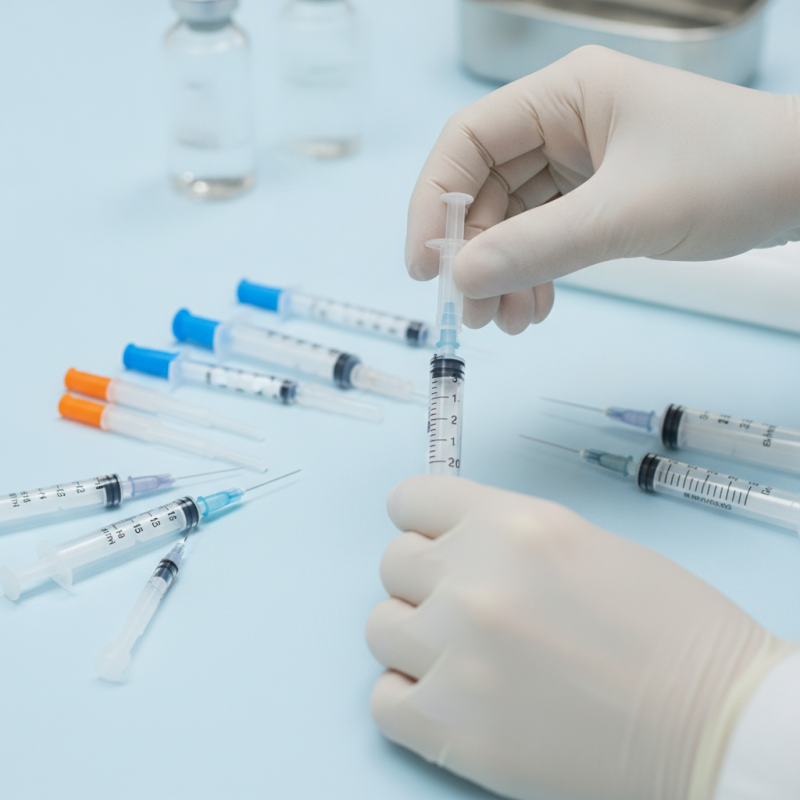
How to Choose the Right Syringe Size for Your Needs?

Understanding the Different Types of Syringes Available in the Market

Choosing the right syringe size can be challenging given the variety available. Syringes come in different types, sizes, and features, catering to various needs. The most common types include standard syringes, insulin syringes, and prefilled syringes. Each type has specific applications based on the volume and precision required.

Standard syringes often range from 1 mL to 60 mL. They are versatile and suitable for general medical purposes. Insulin syringes are specifically designed for insulin delivery and usually hold 0.3 mL to 1 mL. These syringes offer finer measurement markings for accuracy. Prefilled syringes, on the other hand, come with medication already inside. They ensure ease of use and are often found in emergency kits.

Understanding the purpose of each type is crucial. For instance, selecting a syringe that is too large could lead to errors in dosing. Conversely, using a syringe that is too small may not allow for an adequate volume of fluid. It’s essential to reflect on personal needs and the specific application. Take the time to evaluate your requirements before making a choice, as this impacts health and safety.

How to Choose the Right Syringe Size for Your Needs?

This chart illustrates the frequency of usage for different syringe sizes in the market. Understanding these trends can help you choose the right syringe for your specific needs.

Factors to Consider When Choosing Syringe Size for Specific Applications

When selecting a syringe size, several factors must be considered. The volume required is critical in determining the appropriate syringe size. For example, a study published in the Journal of Medical Devices indicates that using the right syringe size can improve medication delivery efficiency by up to 25%. Smaller syringes, like 1 mL or 3 mL, are ideal for precise dosing, especially for pediatric patients. Larger syringes, such as 10 mL or 20 mL, are suitable for drawing or administering larger volumes, often needed in hospitals.

Another important factor is the viscosity of the fluid. Highly viscous solutions may require larger syringes to facilitate easier withdrawal. Data from the International Journal of Pharmaceutical Compounding shows that using a syringe size 2-3 times larger than the volume of the fluid can reduce the effort needed by nearly 30%. The needle gauge must also be matched with syringe size, particularly for thicker materials, as a mismatch can lead to waste and undesirable results.

User comfort cannot be overlooked. A syringe that feels clumsy in hand can lead to errors. Research suggests that user satisfaction can drop drastically if the syringe does not fit the hand well. Therefore, testing different sizes before making a decision can be beneficial. Familiarity with the requirements of specific applications ensures more effective use of syringes in medical settings.

How to Determine the Correct Syringe Volume for Your Needs

Choosing the right syringe volume is essential for accuracy and effectiveness. To determine the correct volume, consider the type of medication or fluid you will be administering. For precise measurements, you may require smaller syringes, typically ranging from 1 mL to 5 mL. Larger volumes, like 10 mL or 20 mL, are better for drawing up larger quantities. Knowing the dose is crucial.

Your comfort level with the syringe is also important. A smaller syringe might be easier to handle for delicate tasks, while a larger one can accommodate more fluid. Sometimes, people select syringes based on availability rather than actual need. This can lead to waste or inaccurate dosing. Evaluate your specific situation carefully.

Another factor is the method of administration. Intravenous and intramuscular injections might require different sizes. Not everyone knows that using the wrong size can lead to complications. Ensure to reflect on past experiences where an improper size caused issues. In the end, understanding your requirements can lead to more effective use of syringes.

The Importance of Needle Gauge in Selecting the Right Syringe

When selecting the right syringe, understanding needle gauge is crucial. The gauge refers to the diameter of the needle. A smaller gauge number indicates a larger needle, while a larger number means a thinner needle. For example, a 16-gauge needle is thicker than a 25-gauge needle. This can affect not only comfort but also the delivery of specific substances.

Choosing the correct gauge depends on your needs. Thicker needles are suitable for viscous fluids. They allow for faster flow but can be painful. Conversely, thinner needles are less painful and ideal for medications that flow easily. It’s essential to consider the purpose of the injection. Some users may overlook the importance of gauge, assuming any size will suffice. However, this can lead to complications or suboptimal results.

There is also personal comfort to consider. For those who are anxious about needles, choosing the right gauge can make a difference. A thin needle may ease the fear of injections. However, it might not be the best option for thicker solutions. Finding a balance between comfort and function is key. Reflecting on your specific needs can lead to a better experience in the long run.

Common Mistakes to Avoid When Choosing a Syringe Size

Choosing the right syringe size is crucial in various medical and laboratory settings. A common mistake is selecting a syringe without considering the volume needed for the procedure. For instance, using a 1 mL syringe for a 15 mL injection can lead to inaccurate dosing and potential complications. According to a study published in the *Journal of Clinical Medicine*, nearly 40% of healthcare providers reported using the wrong syringe size at least once in their careers.

It's vital to assess the specific needs of your situation. Always consider the viscosity of the fluid and the required precision. For instance, a thicker fluid may require a larger bore needle, thus a bigger syringe. Underestimating the size may lead to frustration and errors. When in doubt, consult with a healthcare professional or refer to standard guidelines.

**Tips:**
- Measure twice, choose once.
- Understand the fluid type to prevent issues.
- Double-check the requirement before proceeding.

Avoid the trap of assuming that bigger is always better. Larger syringes may hold more but can compromise the control you have during injections. Carefully evaluate your needs to make the best choice. Understanding the details can save time and enhance safety in critical situations.

FAQS

: How do I determine the appropriate syringe size?

: Consider the volume required for your specific application. Smaller syringes offer precise dosing.

What is the impact of fluid viscosity on syringe choice?

Thicker fluids often require larger syringes for easier withdrawal, enhancing efficiency and comfort.

Why is user comfort important when selecting a syringe?

An uncomfortable syringe can lead to errors during medication administration. Test different sizes for the best fit.

Can using the wrong syringe size lead to complications?

Yes, improper syringe size can result in inaccurate dosing and potential complications during procedures.

What common mistakes should I avoid when choosing a syringe?

Do not select based only on availability; always assess your specific needs and volume required.

How can I ensure accurate dosing with syringes?

Always measure the required dosage accurately and select a syringe that matches this volume appropriately.

Is there a recommended way to select syringe sizes?

Evaluate the fluid type and viscosity, and align syringe size with your administration method for optimal results.

Why might some providers use the wrong syringe size?

Many choose based on convenience rather than actual need, leading to waste and dosing errors.

What should I remember about syringe size and control?

Bigger syringes may hold more, but they can compromise precision and control during injections.

How can reflection on past experiences help with syringe selection?

Reflecting on previous mistakes can inform better choices and improve effectiveness in future applications.

Conclusion

When considering how to choose the right syringe size, it is essential to understand the different types of syringes available in the market. Each type serves specific applications, so knowing their features and functions is crucial. Factors such as the volume needed for your procedure and the viscosity of the fluid being injected play a significant role in selecting the appropriate syringe size.

Additionally, it's important to consider the needle gauge, as it affects the flow rate and comfort level during injection. Common mistakes, such as underestimating the needed volume or choosing an improper gauge, can lead to inefficient and uncomfortable applications. By taking all these factors into account, you can ensure that you select the right syringe size tailored to your specific needs.

Henry

Henry

Henry is a dedicated marketing professional with a profound expertise in the company's offerings. With years of experience in the industry, he possesses an impressive understanding of the market dynamics and consumer behaviors that drive success. Henry is committed to sharing his insights through......