Choosing a syringe is not a packaging decision alone. It is a patient-safety decision. The World Health Organization estimated that around 16 billion injections were administered worldwide each year, underscoring how often small equipment choices matter. WHO defines a safe injection as one that “does not harm the recipient, does not expose the provider to any avoidable risks and does not result in waste that is dangerous for the community.” That definition is a useful starting point for asking what makes a syringe safe for injections.
Dr. Edward Kelley, former Director of Service Delivery and Safety at WHO, has emphasized the importance of reliable health services and safe care. In practice, check that the syringe is sterile, sealed, undamaged, and clearly marked for single use. Match its capacity and measurement scale to the prescribed dose; a tiny graduation mark can matter when accuracy is essential. The needle must also suit the medication and administration route, as advised by a qualified healthcare professional. WHO guidance warns that reusing injection equipment can spread blood-borne infections. A clean-looking syringe is not proof of sterility. FDA guidance and recognized manufacturing standards also support careful attention to labeling, packaging, and product quality. No single feature guarantees safety. The packaging may look perfect, yet the wrong size or scale can still create risk. A clinician or pharmacist can help verify the right choice. That check is worth the moment.
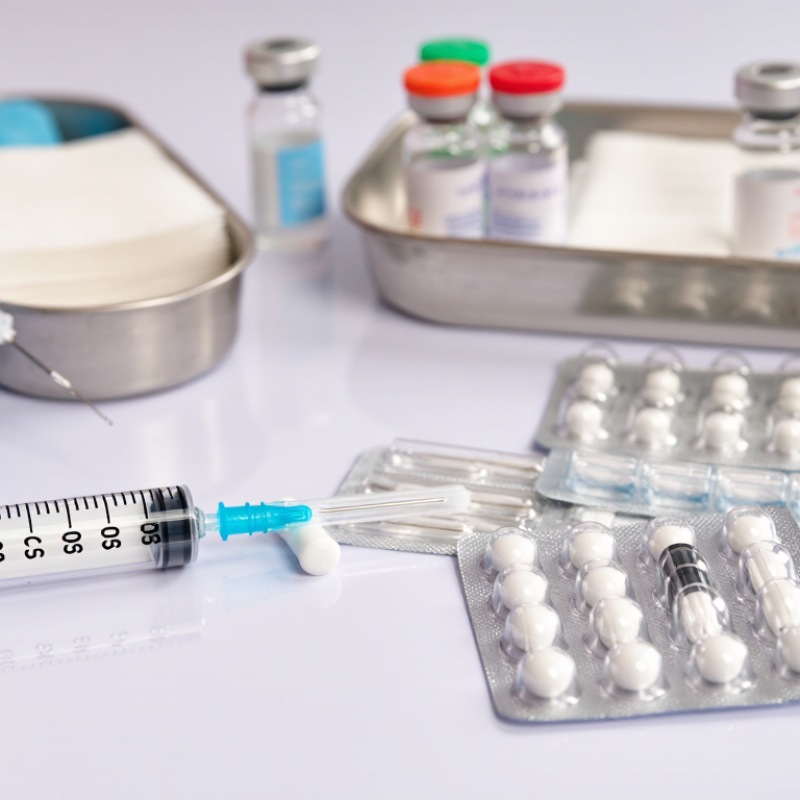
Before choosing a syringe, match the medication name and concentration on the label to the prescription. Check the expiration date and inspect the liquid for unexpected cloudiness or particles; follow the medication’s instructions if appearance matters. The World Health Organization estimated that about 16 billion injections were given worldwide each year (WHO, WHO Guideline on the Use of Safety-Engineered Syringes, 2016). A small mismatch can matter. Labels can be hard to read when you are tired, so pause and verify rather than guess.
Confirm the prescribed dose and its units, then choose a syringe whose scale measures that amount clearly. Milliliters and medication-specific units are not interchangeable. Next, confirm the injection route—such as subcutaneous, intramuscular, or another route—with the prescription or a qualified healthcare professional. Syringe capacity, markings, and needle specifications must suit both the medication and route. Do not rely on needle color or appearance alone. If the label, dose, or route is unclear, stop and ask a pharmacist or clinician before injecting.
Tips: Read the label aloud, check the dose twice, and keep the syringe markings visible while drawing up medication. Use a new, sterile syringe for each injection, and never share one. When unsure, wait and get professional guidance.
Choose capacity from the prescribed dose, not from whichever syringe looks familiar. The World Health Organization estimates that about 16 billion injections are given worldwide each year. That scale makes accurate device selection essential (WHO, Injection Safety fact sheet).
For small volumes, a lower-capacity syringe may offer finer graduations, but markings vary by design. Check the smallest scale marking and the unit printed on the barrel. A 0.2 mL dose can be difficult to measure on a coarse, larger-capacity scale.
Syringe type must also match the medication and route specified by a healthcare professional. ISO 7886-1 sets requirements for disposable syringe graduations and performance, but the standard does not replace checking the actual markings.
For insulin, confirm that the syringe concentration marking matches the prescribed insulin; never estimate a conversion.
The awkward part: packages can look alike, and a quick glance is not enough. If the dose falls between markings, or the syringe type is unclear, ask a pharmacist or clinician before use.
A syringe and needle must fit as a system, not just look similar. Check that the connector, such as a slip-tip or locking connection, matches the syringe. The needle should sit securely without being forced. A mismatch can cause leakage or detachment. Choose needle length and gauge according to the prescribed injection route, body site, medication, and clinician’s instructions. The same needle is not right for every person or location. Gauge numbers can be confusing: a higher number generally means a finer needle. Still, finer is not automatically better.
Keep it practical. Confirm the syringe capacity allows accurate measurement, then check the sterile package for damage or moisture. Use a new, single-use needle and syringe for each injection; never reuse or share them. Follow the product instructions and ask a pharmacist or clinician if the intended site or needle specification is unclear. It may seem like a small detail. It matters. Do not choose by appearance alone: packaging lists the specifications, and a qualified professional can confirm what suits your situation. A quick check helps prevent a mismatch, but it cannot replace individualized medical guidance.
How to Choose a Safe Syringe for Injections?
Check Packaging, Sterility, and Expiration Before Use
A syringe can look clean and still be unsafe. Check the sealed package under good light before opening it. Reject any pack that is torn, wet, punctured, unsealed, or visibly dirty. The sterile barrier matters. CDC injection-safety guidance recommends checking package integrity and expiration dates, and using a new sterile needle and syringe for each injection.
Read the printed expiration date, including the month and year. Do not use an expired syringe, even if its package appears intact. Also check that the syringe matches the intended dose and that its barrel, plunger, and measurement markings are undamaged and legible. Follow the storage instructions on the packaging; heat, moisture, or crushing can compromise a product. If the seal seems questionable, pause and choose another. That extra check can feel fussy, but it is worthwhile.
The stakes are real. The World Health Organization’s assessment of unsafe injections estimated that, in 2010, they caused 1.7 million hepatitis B infections, 315,000 hepatitis C infections, and 33,800 HIV infections worldwide. Those figures describe unsafe injections broadly, not packaging defects alone. They do underline why sterile, single-use equipment matters. WHO and CDC guidance support using sterile equipment and avoiding reuse. A clean-looking pack is not proof of sterility; when in doubt, don’t use it.
| What to Check | What to Look For | Do Not Use If | Why It Matters |
|---|---|---|---|
| Intact packaging | Individual packaging is fully sealed, dry, and free of holes, tears, or open seams. | The package is damaged, wet, open, or appears to have been tampered with. | Damaged packaging may compromise the syringe’s sterility. |
| Sterility information | The package is labeled sterile and intended for single use. Follow any instructions on the package. | The sterility label is missing or unreadable, or the package’s integrity is uncertain. | A syringe that may no longer be sterile can introduce germs and cause infection. |
| Expiration date | The labeled expiration date has not passed. Check the date before opening the package. | The syringe is expired or the expiration date cannot be read. | After expiration, the manufacturer’s assurance of sterility and product integrity may no longer apply. |
| Syringe size and markings | The capacity and measurement markings match the medication instructions and the dose prescribed by a qualified healthcare professional. | The markings are unclear, the syringe is the wrong type or size, or you are unsure how to measure the dose. | Choosing the correct syringe helps support accurate measurement. Do not guess a dose. |
| Needle and protective cap | If supplied with a needle, check that the needle is covered and appears straight and undamaged without removing the cap before use. | The needle is bent, exposed, visibly damaged, or its protective cover is loose or missing. | A damaged or exposed needle can cause injury or contamination. |
| Syringe condition | After opening, check that the barrel, plunger, and tip look clean and undamaged, and that the plunger moves as intended. | You see cracks, particles, discoloration, or other damage, or the syringe does not work properly. | Defects or visible contamination can affect safe handling and use. |
| Storage and handling | Store the syringe as directed on its packaging and keep it in its original package until use. | It has been stored in conditions that conflict with the package instructions or its storage history is uncertain. | Following storage instructions helps preserve the product as intended. |
| Single-use status | Use a new, sterile syringe for each injection, and never share syringes or needles. | The syringe has already been used, even if it looks clean. | Reusing or sharing injection equipment can spread infections and may cause injury. |
| Disposal after use | Place used needles and syringes promptly in an approved sharps disposal container, following local rules. | Do not leave used sharps loose or put them in household recycling. | Proper disposal helps prevent needlestick injuries and protects other people. |
Important: Follow the medication instructions and advice from a qualified healthcare professional. If a syringe’s safety or suitability is uncertain, do not use it; ask a pharmacist or healthcare professional for guidance.
Use a syringe that matches the medication and instructions from your healthcare professional. The correct size and needle depend on the prescribed dose and how the medicine is given. If anything is unclear, ask a pharmacist or clinician before using it.
Check that the package is sealed, dry, and within its expiration date. Do not use a syringe if the wrapper is torn or the device looks damaged. Clean hands and a clear, well-lit surface make small details easier to notice. A brief pause helps.
Use each syringe and needle only once, and never share them. Reusing a device can spread infection or affect the dose. Follow the medication instructions, and do not touch the needle or other sterile parts.
After use, place the syringe directly into an approved sharps container; do not leave it on a counter or put it loose in household trash. Keep the container upright, away from children and pets, and close it when it reaches the fill line. Never force in more sharps. If you do not have a container, ask a pharmacist or local health service how to obtain one and where to return it. Disposal guidance varies by location, and guessing is not ideal.
Match the medication name and concentration to the prescription. Check the expiration date and inspect the liquid as directed. If anything is unclear, pause and ask a pharmacist or clinician.
Confirm the amount and units before drawing medication. Milliliters and medication-specific units are not interchangeable. Choose a syringe with clear markings for the prescribed amount.
Confirm the route with the prescription or a qualified healthcare professional. Syringe capacity and needle specifications should suit the route. Don’t guess.
Check that the connector fits securely. Select needle length and gauge according to the prescribed route, injection site, medication, and professional guidance. Appearance alone is not enough.
Inspect it under good light. Don’t use a package that is torn, wet, punctured, unsealed, or visibly dirty. A clean-looking package is not proof.
No. Check the printed month and year, even when the package seems intact. If the date is missing or hard to read, choose another syringe.
No. Use a new, sterile, single-use syringe and needle for each injection. Never share them. It matters.
Stop before injecting. Keep the syringe markings visible, and ask a pharmacist or clinician to check the medication, dose, route, and equipment. A quick visual check can miss things.
Choosing a safe syringe for injections starts with confirming the medication, prescribed dose, and intended injection route. The syringe should hold the dose accurately without requiring unnecessary extra capacity, and its measurement markings should be clear and easy to read. Select a needle that is compatible with the syringe and appropriate for the injection site and route, following the medication instructions or guidance from a qualified healthcare professional.
Before use, check that the package is sealed and undamaged, the syringe is sterile and intended for single use, and the expiration date has not passed. Do not use equipment if its packaging is open or compromised. Use the syringe only as directed, avoid touching the needle, and place the used syringe and needle immediately into an approved sharps container. These checks help explain what makes a syringe safe for injections: correct fit, intact sterility, careful handling, and proper disposal.

JZCare Syringe