Choosing a syringe is not simply a purchasing decision. It affects dosage accuracy, handling comfort, waste, and patient safety. For buyers comparing China top syringe suppliers, size selection should match the procedure, fluid volume, viscosity, and required measurement precision.
The World Health Organization emphasizes appropriate injection equipment, clear graduations, and safe handling in its injection-safety guidance. These details matter on a busy medical cart. A 1 mL syringe can support finer measurement for small volumes, while a 5 mL or 10 mL syringe may suit larger fluid transfers. Larger syringes are not automatically better. Excess capacity can make small doses harder to read accurately.
So, how to choose the right syringe size? Begin with the intended volume, then select the smallest practical barrel that safely accommodates it. Check graduation intervals, tip design, material, sterility, and compatibility with needles or medical connectors. Industry reports from Grand View Research and Fortune Business Insights identify continued growth in the global disposable syringe market, driven by vaccination, chronic disease care, and hospital demand. However, their market definitions and forecasts differ. Treat projections as direction, not proof of supplier quality.
Reliable sourcing requires more than comparing unit prices. Ask suppliers for ISO 13485 certification, product specifications, batch traceability, sterilization validation, and documented quality-control procedures. Request samples. Test graduation visibility under realistic lighting. A printed catalog cannot reveal every practical weakness. Supplier experience also matters, especially when custom packaging, export documentation, or consistent repeat orders are required. Some claims may sound impressive, but independent verification remains necessary. The right size is only one part of a dependable syringe procurement decision.
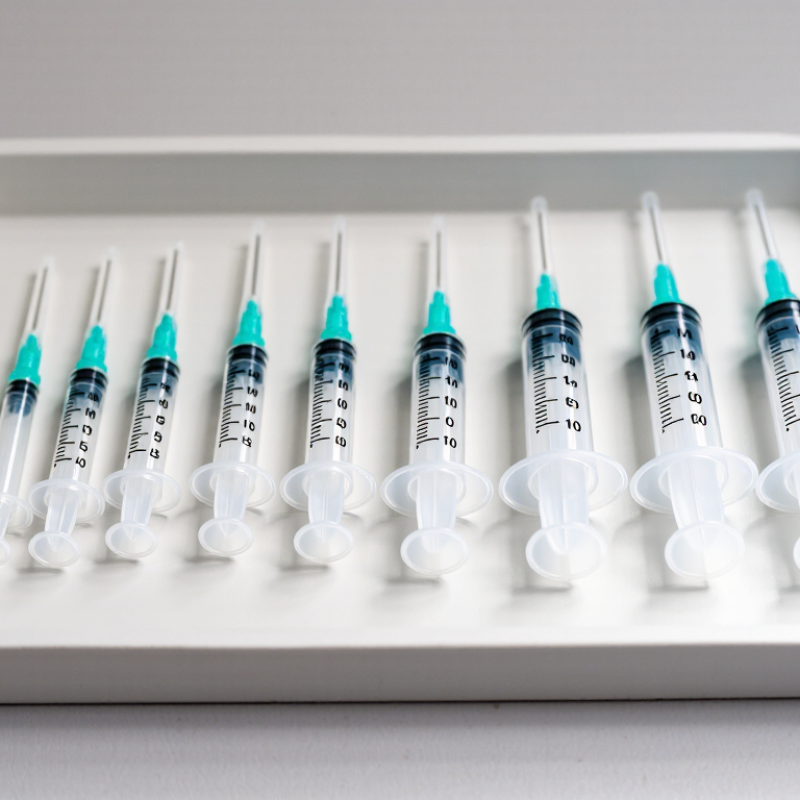
Syringe Sizes and Their Common Medical Applications
Choosing syringe size requires matching volume, dose, viscosity, route, and measurement precision. The World Health Organization estimates that about 16 billion injections are administered worldwide each year. Small sizing errors can therefore affect many routine procedures. A 1 mL syringe supports precise low-volume use, including insulin or tuberculin testing. A 3 mL syringe fits many intramuscular and subcutaneous medications. It is common, but not universal.
Larger 5 mL and 10 mL syringes may support medication preparation or controlled irrigation under clinical protocols. Syringes from 20 mL to 60 mL are often used for irrigation, aspiration, or enteral feeding, rather than routine injections. ISO 7886-1 covers sterile, single-use syringe performance requirements. Buyers should request graduation accuracy, dead-space data, material compatibility, and sterile-packaging records. Needle choice remains separate. CDC guidance commonly references 22–25 gauge needles for intramuscular vaccination, with length selected by age, body size, and injection site.
Supplier catalogs can make sizing look simple. It is not. A 10 mL barrel may feel easier to handle, yet reduce reading precision for a 0.8 mL dose. When comparing China-based suppliers, clinical users should review samples, batch records, inspection reports, and traceability documents. WHO’s injection-safety guidance also supports reducing unnecessary handling and contamination risks. I would not approve a size from volume alone. Real workflow testing matters.
How to Match Syringe Capacity to Injection Volume
China Top Syringe Suppliers: How to Choose the Right Size?
How to Match Syringe Capacity to Injection Volume
Choosing syringe capacity starts with the intended injection volume, not the package size. Use the smallest suitable syringe that clearly accommodates the dose. A 0.3 mL dose usually needs a 1 mL syringe. A 2 mL dose may require a 3 mL syringe. Avoid filling the barrel to its maximum line whenever possible. Extra space makes reading easier and reduces handling errors.
Graduation size matters. For small volumes, fine markings improve measurement control. A 1 mL syringe with 0.01 mL or 0.02 mL graduations can offer better visibility than a larger barrel. For higher volumes, a 5 mL or 10 mL model may be more practical. Check dead space, tip design, plunger movement, and material compatibility before ordering. These details affect actual performance.
A simple capacity chart can mislead. The correct choice also depends on viscosity, injection frequency, and the operator’s technique. In procurement reviews, I would request dimensional drawings, tolerance data, sterility information where applicable, and batch documentation from the supplier. Ask for samples. Test them with the real liquid and intended needle. Small differences become obvious then. I have seen teams select a larger syringe for convenience, only to discover that the scale was difficult to read. Rechecking the volume range is worthwhile. Suppliers should explain their specifications clearly, not merely quote the lowest price.
China Top Syringe Suppliers: How to Choose the Right Size?
Match the syringe capacity to the intended injection volume. Select the smallest syringe that can hold the full dose without exceeding its nominal capacity. Smaller syringes generally make small-volume measurements easier to read, while larger syringes are suitable for higher-volume injections.
The chart compares common syringe capacities with example injection volumes that fit within each size. Actual selection should also consider the required graduation, fluid viscosity, injection method, and applicable medical regulations.
Choosing the Correct Needle Gauge and Length
Choosing the Correct Needle Gauge and Length
Needle selection should match the injection route, patient size, and medication viscosity. A higher gauge means a thinner needle. The CDC’s Vaccine Administration guidance commonly lists 22–25 gauge needles for adult intramuscular injections, with lengths of 25–38 mm. Subcutaneous injections often use a 16 mm needle, but body tissue depth still matters. These figures guide practice, not replace clinical assessment.
Length affects whether medication reaches the intended tissue. A needle that is too short may leave an intramuscular dose in fatty tissue. A needle that is too long can increase discomfort or injury risk. WHO injection-safety guidance stresses appropriate equipment, trained personnel, and safe disposal. ISO 7864 also specifies requirements for sterile, single-use hypodermic needles. Suppliers should provide test certificates, sterilization records, and lot traceability. Documents matter.
Tips: Match the gauge to fluid thickness. Inspect the package seal. Confirm the needle is sterile and undamaged. Ask a qualified clinician before changing size. I have seen purchasing teams choose by price alone, then discover that one “standard” size does not suit every patient. That assumption needs reconsideration. Local protocols, age, body build, and injection route may change the correct choice.
China Top Syringe Suppliers: How to Choose the Right Size?
Choosing the Correct Needle Gauge and Length
General selection guide. Final needle and syringe selection should follow the intended procedure, medication instructions, and qualified healthcare guidance.
| Needle Gauge |
Approx. Outer Diameter |
Typical Relative Flow |
Common General Applications |
Typical Length Range |
Key Selection Consideration |
| 18G |
About 1.27 mm |
Very high |
Rapid transfer of relatively viscous fluids; drawing up medication in some clinical settings |
25–40 mm |
Fast flow, but larger diameter may increase tissue discomfort |
| 20G |
About 0.91 mm |
High |
General fluid withdrawal or administration when a larger bore is required |
25–40 mm |
Useful balance between flow rate and handling |
| 21G |
About 0.82 mm |
Moderate to high |
Common general-purpose option for drawing up or administering suitable solutions |
25–40 mm |
Often selected when moderate flow is needed |
| 22G |
About 0.72 mm |
Moderate |
General-purpose injections and selected subcutaneous or intramuscular procedures |
25–40 mm |
A practical middle range for diameter and flow |
| 23G |
About 0.64 mm |
Moderate |
Subcutaneous or intramuscular use when a slightly finer needle is appropriate |
16–40 mm |
Smaller bore may reduce discomfort but increases resistance |
| 25G |
About 0.51 mm |
Moderate to low |
Selected subcutaneous and intramuscular injections; some short-needle applications |
16–38 mm |
Fine needle with slower flow than larger gauges |
| 27G |
About 0.42 mm |
Low |
Fine-gauge subcutaneous injections and other applications requiring a smaller bore |
13–25 mm |
Lower flow rate; avoid using with solutions that require high flow |
| 30G |
About 0.31 mm |
Low |
Very fine-volume injections and procedures requiring a small needle diameter |
8–16 mm |
Minimal bore and slower delivery; verify compatibility with the solution |
Gauge rule
A higher gauge number indicates a smaller needle diameter. A lower gauge number indicates a larger bore and generally faster flow.
Length rule
Choose the shortest length that reliably reaches the intended tissue or access site while maintaining safe control.
Syringe volume
Use a syringe capacity that is close to the required volume for clearer graduations and more accurate measurement.
Evaluating China’s Top Syringe Suppliers
Evaluating China’s Top Syringe Suppliers
Choosing a syringe supplier requires more than comparing unit prices. The World Health Organization estimates that about 16 billion injections occur worldwide each year, with roughly 90% used for therapeutic purposes. This volume makes consistency, sterility, and traceability essential. China’s leading suppliers should provide ISO 13485 quality systems, ISO 7886-1 testing, batch records, and clear inspection procedures. Ask for recent certificates, not scanned documents from years ago.
Syringe size must match the dosage and liquid properties. A 1 mL syringe supports small-volume accuracy, while 3 mL models suit common injections. Five and 10 mL options work better for larger volumes, but they may reduce reading precision. Needle gauge, length, connector design, and dead space also affect performance. Suppliers should explain these choices with dimensional drawings and sample testing. A reliable factory will discuss tolerances openly.
Do not trust rankings alone. Visit the production site when possible. Check molding areas, cleanroom controls, sterilization validation, and packaging strength. The WHO and UNICEF emphasize dependable injection-supply planning, especially where demand changes quickly. Request production capacity data, rejection rates, and lead-time records. My own evaluation is rarely perfect. A supplier can pass an audit and still struggle during peak orders. Small trial batches reveal more than polished presentations. Check every detail.
Quality, Compliance, and Customization Factors to Compare
Choosing among China’s top syringe suppliers requires more than comparing catalog prices. WHO’s Injection Safety fact sheet estimates that about 16 billion injections occur worldwide each year, making consistent performance essential. Ask suppliers to provide ISO 13485 certification, ISO 7886-1 test evidence, and batch-level inspection records. Review dead space, plunger movement, barrel graduation accuracy, leakage resistance, and packaging integrity. A low price means little if measurements drift between lots.
Size should match the procedure, viscosity, delivery volume, and required accuracy.
A 1 mL syringe supports finer measurement, while 5 mL or 10 mL models suit larger volumes. Needle gauge and length also need practical evaluation. Check the fit. Request samples for hands-on testing, especially when using luer-lock or other connection systems. Custom color coding, printed graduations, safety features, and packaging formats may improve workflow, but customization can increase validation time and minimum order quantities.
The World Health Organization also emphasizes sterile, single-use devices within safe injection practices. Suppliers should explain sterilization validation, bioburden controls, traceability, and complaint handling. Do not rely on certificates alone. Inspect production controls and independently verify critical claims where possible. My own caution is simple: the “right” size is not always the smallest or most popular. Clinical staff sometimes prefer familiar dimensions, yet that preference may hide avoidable dosing errors. Test real use conditions before approving a long-term supply agreement.
Conclusion
Selecting the appropriate syringe requires more than matching a product to a basic volume. This guide explains how to choose the right syringe size by reviewing common capacities and their typical medical applications, from small-volume injections to larger fluid delivery. It also shows how to match syringe capacity with the intended injection volume, allowing enough space for accurate measurement while avoiding unnecessary waste. Needle gauge and length are equally important, as they should correspond to the medication, injection route, patient needs, and healthcare professional’s instructions.
When evaluating China’s top syringe suppliers, buyers should compare more than price and production capacity. Important factors include material quality, manufacturing consistency, sterilization procedures, traceability, regulatory documentation, packaging integrity, and quality-control systems. Suppliers that offer customization should clearly define options such as barrel markings, needle specifications, packaging formats, and private labeling. A careful comparison of compliance, reliability, communication, and after-sales support can help healthcare distributors and institutions select safe, consistent syringe solutions for their intended applications.

 JZCare Syringe