When buyers compare China’s top 10 disposable syringe suppliers, product photos rarely tell the whole story. A syringe may look clean, sealed, and unused. That appearance does not prove safe reuse. The central question is simple: can disposable syringes be reused? In routine clinical practice, the answer is no. Disposable syringes are designed for one patient and one procedure, followed by safe disposal.
This guide introduces ten notable Chinese manufacturers and examines their syringe materials, sterility controls, needle options, packaging, certifications, and quality systems. It also considers practical details, such as clear barrel markings, smooth plunger movement, secure needle connections, and intact blister packaging. These features matter in hospitals, clinics, laboratories, vaccination programs, and home-care settings. However, a supplier’s catalogue cannot replace independent verification. Buyers should review certificates, batch records, regulatory registrations, and performance samples before making decisions.
Safety guidance from organizations such as the World Health Organization and the U.S. Centers for Disease Control and Prevention supports single-use practice. Reusing a disposable syringe can transfer bloodborne pathogens, even when the syringe appears clean. A replaced needle does not remove contamination risks inside the barrel or dead space. No ranking is perfect. Supplier capabilities can change, and certification status requires careful checking. This article therefore treats the “top 10” as a practical starting point, not a permanent verdict. Responsible purchasing means asking difficult questions, checking evidence, and protecting every patient from avoidable exposure.
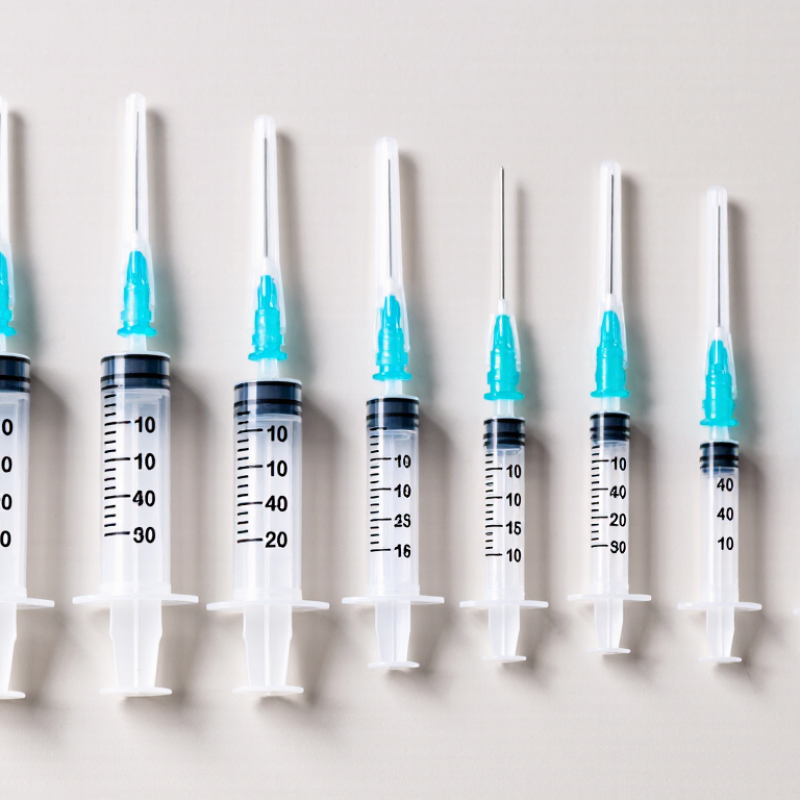
What Makes a Disposable Syringe Single-Use?
A disposable syringe is single-use by design, not by appearance. Its sterile barrier protects the needle, barrel, and plunger until opening. After use, microscopic blood or medication residue may remain inside. Cleaning cannot prove sterility. The WHO’s 2010 injection-safety report estimated about 16 billion injections worldwide each year. That scale makes small handling errors important.
In practice, a syringe may look untouched after one procedure. It can still carry invisible contamination. CDC infection-control guidance says syringes and needles must not be reused between patients. A syringe entering a medication container should also never be reused. FDA reprocessing guidance requires validated cleaning, disinfection, sterilization, and performance testing for single-use devices. Ordinary disposable syringes have no approved reprocessing pathway. Heat, solvents, or brushing may damage seals. They may also change dose accuracy. The plunger can look clean. That is not proof of safety.
Tips: Check the seal, expiry date, and package condition before opening. Use a new sterile syringe for every injection and every patient. Discard it immediately in an approved sharps container. If the package is torn, wet, or unclear, do not use it. Reuse may seem economical, but the risk calculation is incomplete. A cheaper syringe is not cheaper after contamination occurs.
Disposable syringes are manufactured, packaged, and labeled for single use. A syringe may still look functional after an injection, but that does not mean it remains sterile or safe for another patient or another procedure.
What makes a disposable syringe single-use? It is supplied sterile, intended for one procedure, and is not validated by the manufacturer for cleaning, sterilization, or repeated use. After use, the needle and syringe can be contaminated with microorganisms or blood, while repeated handling may damage the barrel, plunger, tip, or protective seal.
Can disposable syringes be reused? Standard disposable syringes should not be reused. Reuse can transmit blood-borne pathogens and compromise medication safety. Only devices specifically designed for validated reprocessing should be considered for reuse under an approved clinical protocol. The chart shows common nominal capacities, not sales rankings or company data.
China Top 10 Disposable Syringes: Can They Be Reused?
When evaluating China’s top ten disposable syringe suppliers, begin with documented manufacturing controls. Ask for current certifications, production-site details, and product-specific test reports. A polished catalog is not enough. Inspect whether each batch has traceable lot numbers, expiry dates, and sterile packaging. Details matter.
Request samples from several production lots, not only one attractive shipment. Check barrel clarity, plunger movement, graduation accuracy, needle attachment, and leakage under practical conditions. Independent laboratory testing can verify sterility and material safety. Ask how suppliers investigate failed batches and manage corrective actions. Their response often reveals more than sales language.
A disposable syringe is designed for single use. Reusing it can transfer microorganisms, compromise sterility, and create dosing errors. It should not be cleaned and returned to service. Evaluate the supplier’s instructions, warning labels, and packaging integrity before purchase. Also review delivery consistency, complaint handling, and technical support. A supplier may meet paperwork requirements yet perform unevenly across shipments. That possibility deserves attention. I would record every finding in a comparison table, while leaving room for uncertainty. “Top ten” rankings can change when testing depth, after-sales service, and production transparency are weighted differently.
The table below provides ten evidence-based dimensions for evaluating disposable syringe suppliers in China. It is an evaluation framework rather than a ranking of named companies. Disposable syringes are generally designed for single use and should not be reused unless a legally authorized, validated reprocessing program is in place.
| No. | Evaluation Dimension | Verified Technical or Regulatory Reference | What a Qualified Supplier Should Provide | Recommended Weight | Buyer Verification Method |
|---|---|---|---|---|---|
| 1 | Single-use design and reuse control | Disposable syringes are intended for one-time use. A used syringe or needle can transmit blood-borne pathogens and must not be reused. | Clear single-use labeling, disposal instructions, and documented controls preventing relabeling or repackaging of used products. | 15% | Review labels, instructions for use, packaging artwork, and the supplier’s post-market complaint procedure. |
| 2 | Product standard compliance | ISO 7886-1 specifies requirements and test methods for manually operated single-use syringes, where applicable. | A current declaration of conformity, applicable test reports, and technical documentation covering the supplied syringe configuration. | 12% | Confirm that the certificate and test reports apply to the exact size, tip type, material, and sterile configuration being purchased. |
| 3 | Quality management system | ISO 13485 is the internationally recognized quality-management standard for medical devices. | A valid ISO 13485 certificate issued by an appropriately recognized certification body, with the correct manufacturing scope. | 12% | Check certificate validity, scope, issuing body, factory address, and audit status independently. |
| 4 | Sterilization validation | Common medical-device sterilization methods include ethylene oxide, radiation, and moist heat; each requires an appropriate validated process. | Sterilization method, validation summary, routine monitoring records, and evidence that the process covers the final packaged product. | 12% | Request sterilization certificates and verify batch or lot traceability on sample packaging. |
| 5 | Material safety and biocompatibility | ISO 10993 provides a framework for evaluating the biological safety of materials and medical-device contact risks. | Material specifications for barrel, plunger, gasket, lubricant, and needle components, supported by applicable biological-safety assessments. | 10% | Compare the bill of materials with the technical file and request change-control notification for material substitutions. |
| 6 | Dimensional accuracy and leakage performance | ISO 7886-1 includes performance-related requirements for syringe dimensions, dead space, leakage, and operation, where applicable. | Inspection records for nominal capacity, graduations, plunger movement, leakage, dead space, and connection integrity. | 10% | Conduct incoming sampling with calibrated equipment and compare results with approved specifications. |
| 7 | Needle and connection compatibility | ISO 7864 covers sterile hypodermic needles for single use; applicable connector requirements should also be verified for the selected configuration. | Needle gauge and length range, hub type, protective-cap details, connection specifications, and needle sharpness or penetration test data. | 8% | Test representative samples for fit, secure attachment, burrs, leakage, and packaging integrity. |
| 8 | Packaging and sterile-barrier integrity | Sterile medical devices require packaging that maintains sterility until the point of use when stored and handled as specified. | Packaging specifications, seal-strength or integrity test results, transport simulation evidence, and defined shelf-life conditions. | 8% | Inspect samples for damaged seals, moisture, punctures, missing labels, and inconsistent lot information. |
| 9 | Traceability and complaint handling | Medical-device quality systems should support identification of product lots, nonconformities, corrective actions, and field complaints. | Lot or batch coding, retention-sample policy, recall procedure, corrective-action process, and response-time commitments. | 7% | Request a mock recall and verify that one shipment can be traced back to raw materials and production records. |
| 10 | Regulatory and export documentation | Regulatory requirements depend on the destination market, product configuration, intended use, and claims made on the labeling. | Applicable Chinese registration or filing evidence, destination-market documentation, labeling files, declarations, and authorized representative details when required. | 6% | Verify documents through the relevant regulatory database or authority and ensure all documents match the actual factory and product. |
| Total evaluation weight | 100% | ||||
Disposable syringes are manufactured for one use, not repeated injections. Their sterile packaging protects the device before opening. After use, the barrel, plunger, and needle may carry invisible microorganisms or blood traces. A syringe can look clean and still be unsafe.
Can disposable syringes be safely reused? In ordinary home or clinical settings, no. Reusing one may transfer bacteria between people or into medication. The needle can become dull after one injection, causing more pain and tiny tissue injuries. Repeated handling also increases the chance of touching the needle, cap, or syringe tip. Small mistakes matter.
The risk is easy to underestimate. Washing or wiping the syringe does not reliably restore sterility. Even when the same person uses it again, contamination can enter the medication or injection site. That assumption deserves reconsideration. Healthcare workers follow infection-control procedures and discard used syringes immediately into approved sharps containers. Patients should ask a qualified medical professional about any uncertain device, especially when packaging is damaged, wet, or opened.
A new sterile syringe should be used for every injection. Seems simple. It is still often overlooked.
A disposable syringe is designed for one patient and one procedure. Reusing it can leave microscopic blood inside the hub, barrel, or needle connection. The syringe may look clear. It is not necessarily safe. The CDC Injection Safety guidance states that a syringe must never be reused, even when the needle is replaced. Internal parts can still carry bloodborne pathogens. This matters during injections, vaccinations, and medication preparation.
The health impact is measurable, not theoretical. The World Health Organization’s 2016 guideline on safety-engineered syringes reported that unsafe injections in 2010 were linked to an estimated 1.7 million hepatitis B infections, 315,000 hepatitis C infections, and 33,000 HIV infections worldwide. These figures describe unsafe injection practices broadly, not every reused syringe. Still, they show how a tiny trace of blood can create a major public-health burden. Hepatitis B can damage the liver, while hepatitis C may remain silent for years. HIV can also spread through contaminated blood.
Reusing a syringe may also cause dosing errors. A plunger can stick. Medication can become contaminated. A hidden blood spot may enter another person’s bloodstream. Needlestick injuries add risk for healthcare workers and caregivers. Cleaning or changing only the needle does not make the syringe sterile. That assumption is easy to make, and wrong. In a busy clinic, rushed handling makes mistakes more likely. Safe practice requires a new, sealed, single-use syringe for every injection, followed by disposal in a sharps container under local clinical procedures. Opening it in front of the patient can build trust.
Used disposable syringes should never be reused, even when they look clean. Invisible blood and microorganisms can remain inside the barrel or needle. Safe handling begins immediately after use. Do not recap, bend, break, or remove the needle by hand. Do not improvise.
Place the complete syringe into a rigid, leak-resistant, puncture-resistant sharps container. The container should stay upright and close to the injection area. A household bottle may seem practical, but thin plastic can split or expose the needle. Use an approved container whenever local health guidance requires one. Keep it away from children, pets, and visitors.
When the container reaches its marked fill line, seal it firmly. Never overfill it. Contact a community clinic, pharmacy, medical-waste service, or local public health authority for disposal instructions. Rules differ between cities, so online advice from another region may be unsuitable. Never place used syringes in recycling, loose household rubbish, or toilets. If a needle pierces the skin, wash the area with soap and running water. Seek prompt medical advice, especially when the source is unknown. In real homes, mistakes happen; a container can be forgotten or filled too quickly. That is why a visible disposal point and a simple written reminder can make safer behavior more consistent.
No. It is made for one injection only. A clean-looking syringe may still contain invisible microorganisms or blood traces.
No. Contamination can enter the medication or injection site. The same user does not remove that risk.
No. Household cleaning cannot reliably restore sterility. Small hidden areas may still hold contamination.
No. Blood may remain inside the barrel, hub, or connection. A new needle is not enough.
Contaminated blood may transmit hepatitis B, hepatitis C, or HIV. The risk is serious, even when contamination is invisible.
Yes. The needle may become dull, causing more pain and tiny tissue injuries. The plunger may also stick and affect dosing.
Do not use it if the package is opened, wet, torn, or damaged. Sterility may no longer be reliable.
Place it immediately in an approved sharps container under local clinical procedures. Do not recap, wash, or save it for later.
Ask a qualified medical professional about uncertain devices. You may also request that a new sealed syringe be opened visibly. It can build trust.
This article examines what makes a disposable syringe a single-use medical device, including its sterile packaging, intended design, and inability to be reliably cleaned or resterilized outside approved processes. It also explains how to evaluate China’s top 10 disposable syringe suppliers by reviewing manufacturing quality, material safety, sterility controls, product specifications, traceability, certifications, and quality management practices. These factors can help buyers compare suppliers objectively without focusing only on price.
A central question is: can disposable syringes be reused? In general, they should not be reused because repeated use may cause contamination, loss of sterility, component damage, inaccurate dosing, and infection transmission. Reusing a syringe or needle can put patients and healthcare workers at risk, even when the device appears clean. After use, syringes should be handled carefully, never recapped unnecessarily, and placed immediately into approved puncture-resistant sharps containers. Proper disposal procedures help prevent accidental injuries, contamination, and exposure to infectious materials.

JZCare Syringe