Choosing the best disposable medical syringes from China requires more than comparing prices or packaging. Healthcare providers should examine sterility, materials, accuracy, needle compatibility, and manufacturing consistency. Reliable suppliers usually provide traceable batch information, inspection records, and quality-management documentation. Certification alone is not enough, however. Buyers must confirm that products match the intended clinical use and local requirements.
Many people ask, “how are disposable medical syringes used?” These devices are designed for one controlled procedure. A trained professional may use a syringe to draw medication from a vial, measure a precise dose, or deliver medicine through an appropriate needle. Some models support vaccination, insulin administration, laboratory sampling, or irrigation. Each application demands the correct size, graduation, connection type, and needle specification. A 1 mL syringe offers finer measurement than a larger model. Small details matter.
The syringe should remain sealed until use. Staff inspect the package, check the expiration date, and confirm that the device is undamaged. After administration, it must not be reused. It should enter an approved sharps container immediately. This protects patients, clinicians, and waste handlers. Still, product performance can vary between suppliers, and marketing language may sound stronger than the evidence. That deserves attention. A careful buyer should request samples, review test reports, and assess supply reliability before placing a large order. The best choice is not always the cheapest one. It is the syringe that performs safely, consistently, and appropriately in real clinical settings.
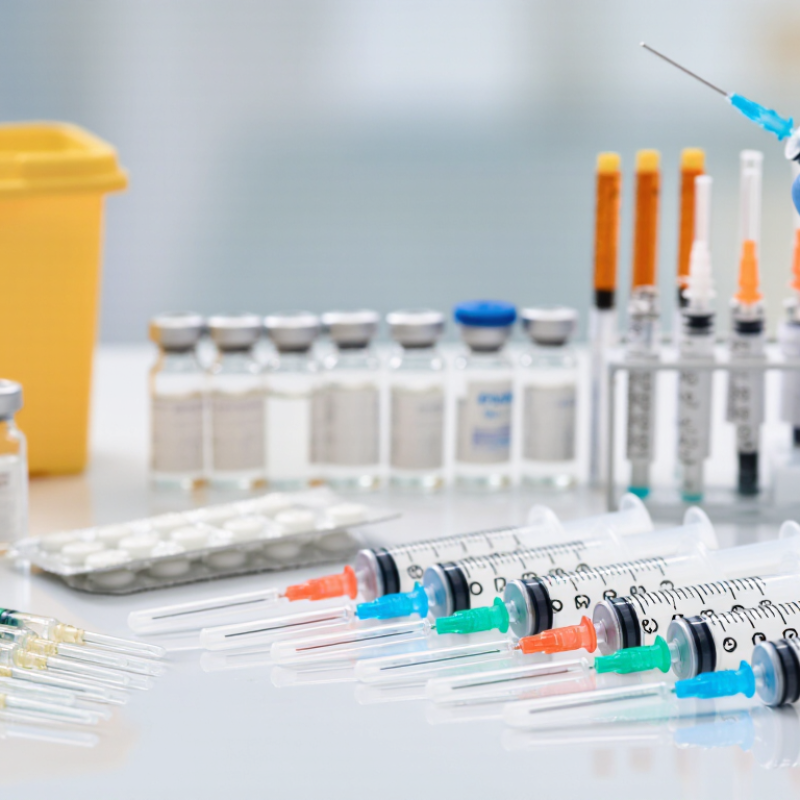
Disposable medical syringes from China are used for injections, medication delivery, and fluid withdrawal. They are designed for one-time use by trained healthcare professionals. Common types include insulin syringes, tuberculin syringes, safety syringes, and larger irrigation syringes. Each type serves a different clinical purpose. For example, insulin syringes usually have fine needles and small volume markings. Tuberculin syringes support precise doses below one milliliter. Safety syringes may include shields that help reduce accidental needle contact.
Key features include clear barrels, readable graduations, smooth plungers, sterile packaging, and secure needle connections. Luer-lock fittings can improve connection stability during procedures. Some models use fixed needles to reduce dead space and medication waste. In practice, the correct size depends on the injection route, dosage, and fluid thickness. A syringe that looks suitable may still be unsuitable for a specific medicine.
Tips: Check the seal, expiry date, graduation accuracy, and needle condition before use. Never reuse a disposable syringe, even when the needle appears clean. Keep packaging dry and inspect it for damage. Buyers should request independent quality records and confirm compliance with the destination market’s medical-device requirements. This step is often overlooked. It should not be. Product descriptions alone cannot prove sterility, performance, or reliable batch control.
Choose a capacity that makes the dose easy to read. A 1 mL syringe often suits small volumes. Larger syringes suit fluid transfer or higher doses.
Match needle gauge and length to the injection route, patient size, and medication thickness. Clinical guidance should decide the final choice. Do not guess.
Check the package seal, expiry date, barrel clarity, and printed graduations. Do not use damaged or cloudy parts. Small details matter.
A secure fitting can reduce disconnection during use. Check compatibility with the needle and connector before procurement. Convenience is not enough.
Wash hands and use a clean, well-lit surface. Keep the needle, plunger tip, and connection point sterile. Avoid touching them.
Follow the prescribed dose and approved clinical procedure. Pull the plunger slowly. Tap out visible air bubbles only as trained. Never estimate the dose.
No. Never reuse or share it, even if it looks clean. After use, place the complete unit into a puncture-resistant sharps container.
Wash the area promptly and report the injury through the facility’s safety process. Do not ignore a small puncture. Rushed preparation remains a weakness.
A trial may expose unclear markings, stiff plungers, or excessive dead space. Staff feedback can reveal issues that specifications miss. Selection is rarely perfect.
Disposable medical syringes from China are available in various sizes, needle configurations, and sterile designs to support injections, medication delivery, vaccination, and fluid withdrawal. Understanding how are disposable medical syringes used begins with selecting the correct syringe capacity, needle size, sterility level, and intended application. Healthcare professionals should check the packaging, expiration date, graduation marks, and product integrity before use. During preparation, wash hands, maintain aseptic technique, remove air bubbles, and follow the prescribed dosage and injection method. Syringes should never be shared or reused, even when the needle is replaced.
After use, handle the syringe carefully to prevent accidental needlestick injuries. Avoid bending, breaking, or manually recapping the needle unless a specific safety procedure requires it. Immediately place the entire used syringe into an approved, puncture-resistant sharps container. Proper segregation, collection, treatment, and disposal help protect healthcare workers, patients, waste handlers, and the environment. Always follow local medical-waste procedures and professional guidance.

 JZCare Syringe